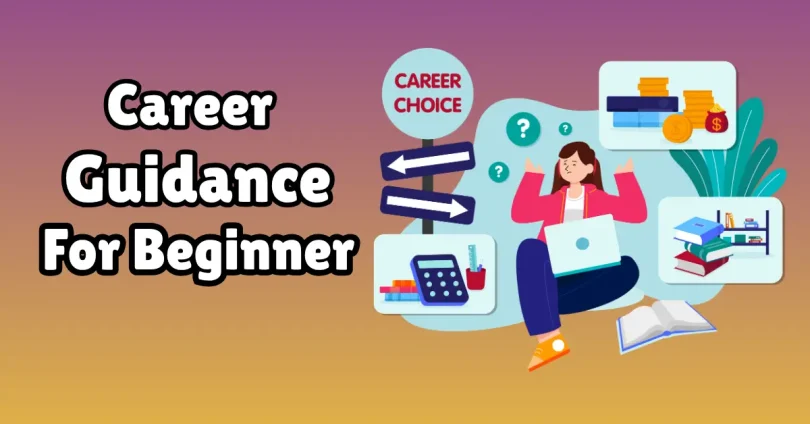

Choosing a career can feel confusing when you are just starting out. You may like several subjects, have different skills, or have no clear idea what you want to do. That is completely normal.
Career Guidance for Beginners is not about finding one “perfect” job immediately. It is about understanding yourself, exploring realistic career options, testing those options, and then choosing the best next step.
The simplest way to start is this: know yourself, shortlist a few careers, research them, test them in real life, compare them, and make an action plan.
Here is how to do it step by step.
What Is Career Guidance for Beginners?
Career guidance helps a person understand which career options may fit their interests, abilities, values, lifestyle, and future goals.
For a beginner, good career guidance should answer practical questions such as:
What am I good at? What type of work would I enjoy? What skills do I need? How long will training take? Can this career support the lifestyle I want? And what should I do first?
Trusted career-planning resources use a similar approach. CareerOneStop encourages people to identify their interests, skills, and values before researching possible careers, while MIT’s career-planning guidance also recommends examining interests, skills, and values before narrowing career options.
Step By Step Career Guidance for Beginners
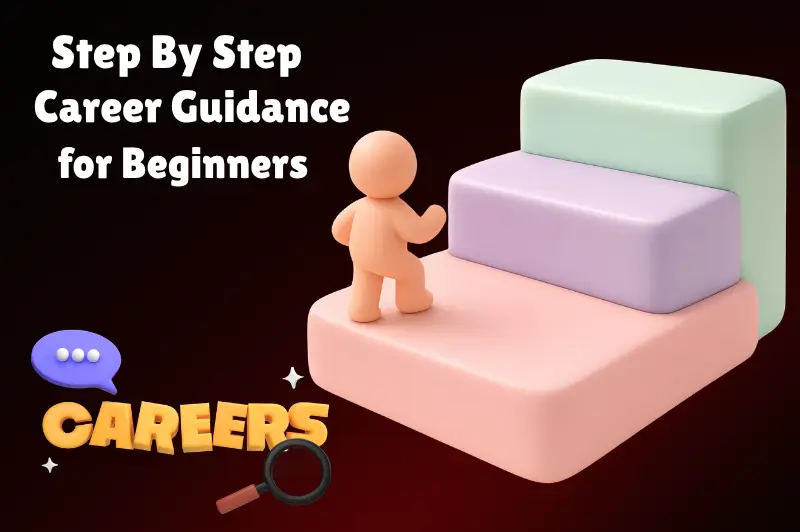
Step-by-Step Career Guidance for Beginners helps you identify your strengths, explore suitable career options, and choose the right path with confidence.
Step 1: Understand Yourself Before Choosing a Career
Do not begin by asking, “Which career pays the most?”
Start with, “What kind of person am I?”
Think about your interests, natural strengths, values, personality, and preferred working style.
For example, someone who enjoys explaining things and helping people may enjoy teaching, training, counseling, customer success, or healthcare. A person who enjoys solving technical problems may be more comfortable in engineering, programming, data, or technical support.
Pay attention to what you naturally enjoy doing, but do not depend on passion alone.
A useful career usually sits somewhere between what you enjoy, what you can become good at, what employers need, and what can support the life you want.
O*NET also organizes careers around different interest types and provides an Interest Profiler that can help people explore occupations connected with their interests.
Step 2: Make a Shortlist of Three Career Options
One common beginner mistake is researching 20 or 30 careers at the same time.
That usually creates more confusion.
Instead, choose three options that look reasonably suitable.
For example, imagine someone likes technology, problem-solving, and creative work. Their shortlist could be:
- Web Developer
- UX Designer
- Digital Marketing Specialist
You are not committing to one of these careers yet. You are simply creating a small list that is easier to investigate.
If you have absolutely no idea where to start, look at broad career fields first, such as technology, healthcare, education, finance, business, skilled trades, engineering, creative work, or public service.
Then narrow the field down.
Step 3: Research the Reality of Each Career
A career can sound attractive until you discover what people actually do every day.
That is why Career Guidance for Beginners should include job reality, not just motivation.
For every career on your shortlist, research the actual work, typical education or training, skills required, entry-level opportunities, salary range, work environment, future demand, and possible career growth.
The U.S. Bureau of Labor Statistics Occupational Outlook Handbook is one useful source because it provides information about hundreds of occupations, including what workers do, typical education requirements, pay, work environment, and employment outlook.
Do not choose a career simply because somebody on social media says it is “high paying.”
Look at the work behind the salary.
You may love the idea of being a software developer but dislike sitting at a computer for long periods. You may like the idea of becoming a doctor but not want the years of education required. You may enjoy graphic design but prefer a stable office role over freelance work.
Those details matter.
Step 4: Talk to Someone Who Already Does the Job
Google can explain a career. A person doing that job can explain what it actually feels like.
Find someone working in one of the careers you are considering and ask about their normal day.
Ask what they enjoy, what they dislike, which skills matter most, how they entered the field, and what they wish they had known as a beginner.
You can speak with a teacher, relative, career counselor, former student, colleague, or professional you find through your network.
You do not need to ask them for a job.
You are collecting information.
Real conversations can reveal things that job descriptions rarely explain, such as pressure, working hours, career progression, workplace culture, or how difficult it is to get the first opportunity.
Step 5: Test the Career Before Making a Big Commitment
This is one of the most useful steps beginners often skip.
You do not have to spend four years studying something before discovering whether you like it.
Run a small career experiment first.
If you are considering programming, complete a beginner coding project. If you are interested in marketing, create a small campaign for a local business or personal project. If you are considering teaching, tutor someone. If graphic design interests you, create several real designs. If healthcare interests you, explore appropriate volunteering or job-shadowing opportunities where available.
Hands-on experiences such as internships, volunteering, part-time work, and job shadowing can help people understand whether a field matches their expectations before making a bigger commitment.
A small test can save you from making a very expensive career decision based only on assumptions.
Step 6: Use a Simple Career Scorecard
Once you have researched and tested your options, compare them instead of relying only on emotion.
Give each career a score from 1 to 5.
| Factor | Career A | Career B | Career C |
|---|---|---|---|
| Interest | /5 | /5 | /5 |
| Skill fit | /5 | /5 | /5 |
| Job opportunities | /5 | /5 | /5 |
| Income potential | /5 | /5 | /5 |
| Training time/cost | /5 | /5 | /5 |
| Lifestyle fit | /5 | /5 | /5 |
| Growth opportunities | /5 | /5 | /5 |
| Total | /35 | /35 | /35 |
The highest score does not automatically become your career.
The scorecard simply forces you to compare important factors instead of choosing because a career sounds impressive.
Step 7: Create Your First 30-Day Career Action Plan
Once one option looks stronger than the others, stop endlessly researching and start moving.
Your first 30 days do not need to change your whole life.
During the first week, learn more about the career and speak with someone working in it. During the second week, begin one beginner-level course or practical project. During the third week, spend time practicing the most important skill required in that field. During the fourth week, review what you learned and decide whether to continue, adjust your direction, or test another option.
Career planning is a process rather than a one-time decision. Career-development guidance commonly recommends reviewing progress and adjusting goals as a person’s experience and circumstances change.
When comparing career options, think beyond the starting salary and consider how your income can support your future goals. Our guide on financial tips for middle class families can help you understand budgeting, saving, and financial stability.
What If You Have No Passion or Career Goal?
You do not need a lifelong passion before you begin.
Sometimes interest develops after you become good at something.
If nothing feels obvious, start with three questions: What problems am I reasonably good at solving? What kind of work do I dislike the least? Which useful skill would I be willing to practice for the next six months?
Then test a few options.
Clarity often comes from action, not from thinking about the same decision for months.
Common Career Mistakes Beginners Should Avoid
Avoid choosing a career only because your friends are choosing it, following family pressure without doing your own research, chasing salary while ignoring the actual work, depending completely on personality tests, committing to expensive education before testing the field, believing your first career choice must last forever, or waiting until you feel 100% certain before starting.
Your goal is not perfect certainty.
Your goal is to make the best informed next decision with the information you currently have.
How Do You Know If a Career Is Right for You?
A good career choice usually passes four tests.
You can imagine yourself doing the actual work, you have or can develop the required skills, the career offers realistic opportunities, and its lifestyle fits the future you want.
If a career only looks good because of its title or salary, research it more deeply before committing.
Frequently Asked Questions About Career Guidance for Beginners
How do I choose a career if I have no experience?
Start by identifying your interests and strengths, shortlist two or three careers, research their requirements, and complete small projects, volunteering, job shadowing, courses, or internships where possible. You can learn a lot about a career before having a full-time job.
What is the first step in career planning?
The first step is self-assessment. Understand your interests, skills, values, strengths, and preferred lifestyle before comparing career options. CareerOneStop and MIT both include self-assessment as an important part of career exploration.
Are career tests accurate?
Career tests can give you ideas, but they should not make the final decision for you. Use them as one source of information alongside career research, real-world experience, and conversations with people working in the field.
Should I choose a career based on salary?
Salary matters, but it should be one factor rather than the only factor. Consider job availability, working conditions, training requirements, growth, flexibility, interests, and lifestyle as well.
Can I change my career later?
Yes. Your interests, skills, goals, and opportunities can change over time. Career planning can be repeated whenever your situation changes.
Final Thoughts
Good Career Guidance for Beginners does not tell everyone to follow the same path.
It helps you understand yourself, research the real job market, test possible careers, compare your choices, and take one practical step forward.
You do not need to know exactly where you will be ten years from now.
You only need enough information to make a smart next move.
Choose three possible careers. Research them. Talk to people. Test the work. Compare your options. Then start building the skills required for the strongest choice.
Your career does not have to begin with complete certainty. It can begin with curiosity, a small plan, and the willingness to learn.