

Ujjivan Small Finance Bank share is followed by investors interested in India’s banking and financial services sector. The bank focuses on providing financial services to individuals, small businesses, and communities that may have limited access to traditional banking facilities.
The company operates in the small finance banking sector, which plays an important role in expanding financial inclusion across India. Its services include savings accounts, loans, deposits, digital banking, and other financial products.
Investors interested in Ujjivan Small Finance Bank share generally examine its business growth, profitability, loan portfolio, asset quality, and future expansion opportunities before making investment decisions.
What Is Ujjivan Small Finance Bank?
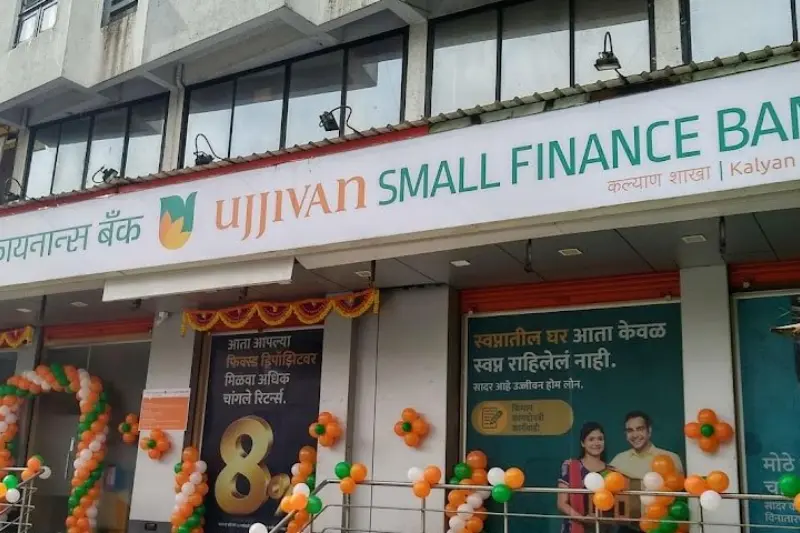
Ujjivan Small Finance Bank is an Indian banking institution established to provide accessible financial services to underserved and financially excluded communities.
The bank serves individual customers, small businesses, and borrowers who need banking and credit facilities.
Its major banking services include:
- Savings accounts
- Current accounts
- Fixed deposits
- Personal loans
- Microfinance loans
- Business loans
- Affordable housing loans
- Gold loans
- Digital banking services
The bank aims to support financial inclusion by offering different banking products to customers across various income groups.
Ujjivan Small Finance Bank Share Information
Ujjivan Small Finance Bank is listed on India’s major stock exchanges.
Important stock information includes:
| Particular | Details |
|---|---|
| Company name | Ujjivan Small Finance Bank Limited |
| NSE symbol | UJJIVANSFB |
| BSE code | 542904 |
| Industry | Banking and Financial Services |
| Sector | Small Finance Banking |
| Stock exchanges | NSE and BSE |
| Face value | ₹10 |
Investors can use the company’s stock symbol to identify its shares when checking market information or researching its performance.
Business Model of Ujjivan Small Finance Bank
The bank follows a business model focused on deposits, lending, and financial services.
Microfinance Banking
Microfinance is an important part of the bank’s business. It provides smaller loans to individuals and groups, particularly in communities with limited access to traditional banking.
These loans can support household needs, small businesses, and income-generating activities.
Affordable Housing Finance
Affordable housing finance helps eligible customers obtain loans for purchasing, constructing, or improving homes.
This segment can create opportunities for banking companies because housing finance is an important part of India’s financial services market.
MSME Banking
Micro, Small, and Medium Enterprises need financial support to manage their operations and expand their businesses.
Ujjivan Small Finance Bank provides banking and lending services to eligible business customers.
Savings and Deposits
Customer deposits are an important source of funds for banks.
Savings accounts, current accounts, and fixed deposits help the bank build its deposit base and support its lending activities.
Digital Banking
Digital banking services allow customers to access banking facilities through electronic channels.
Mobile banking, online transactions, and digital account services can improve customer convenience and operational efficiency.
You may also like these posts:
Anytime Fitness: A Complete Guide to Membership and Benefits
Bajaj Housing Finance Share Price and Stock Analysis
Tech Mahindra Share Price and Stock Analysis Guide
Education Portal 3.0: Login, Registration and Features
Factors Affecting Ujjivan Small Finance Bank Share
Several factors can influence the market performance of Ujjivan Small Finance Bank share.
Financial Performance
Financial results are among the most important factors investors consider.
Revenue, net interest income, operating profit, net profit, and earnings per share help investors understand the bank’s financial condition.
Consistent financial growth may improve investor confidence, while weak results can create pressure on the share price.
Loan Book Growth
The loan book represents the total outstanding loans provided by a bank.
Growth in lending can increase interest income and support business expansion. However, the quality of loans is equally important.
A bank must maintain responsible lending practices to avoid excessive defaults.
Asset Quality
Asset quality shows how effectively a bank manages its loans.
Investors generally examine the following indicators:
- Gross Non-Performing Assets (GNPA)
- Net Non-Performing Assets (NNPA)
- Provision Coverage Ratio
- Loan recovery performance
- Portfolio at Risk
A lower level of bad loans can indicate better credit quality, although all relevant financial indicators should be considered together.
Deposit Growth
Deposits provide funding for banking operations and lending activities.
A growing deposit base can support business expansion. Investors also examine the cost of deposits because higher funding costs may affect profitability.
Interest Rates
Changes in interest rates can influence lending demand, deposit costs, and bank profit margins.
The difference between interest earned on loans and interest paid on deposits is important for understanding banking profitability.
RBI Regulations
The Reserve Bank of India regulates banks operating in India.
Changes in lending rules, capital requirements, and other banking regulations can influence the operations and growth plans of small finance banks.
Financial Performance and Important Indicators
Before investing in Ujjivan Small Finance Bank share, investors should understand its financial performance.
Some important indicators include:
Net Interest Income
Net Interest Income (NII) is the difference between the interest a bank earns from loans and investments and the interest it pays on deposits and borrowings.
Increasing NII can indicate improvement in the bank’s core lending business.
Net Profit
Net profit represents the amount remaining after the company accounts for its expenses, provisions, taxes, and other costs.
Investors generally prefer consistent profitability rather than depending on a single strong quarter.
Net Interest Margin
Net Interest Margin (NIM) measures how effectively a bank earns income from its interest-earning assets.
A healthy NIM can support the bank’s profitability.
Return on Assets
Return on Assets (ROA) measures how efficiently a bank uses its assets to generate profits.
A stronger ROA generally indicates better asset utilisation.
Return on Equity
Return on Equity (ROE) measures the profit generated in relation to shareholders’ equity.
Investors can use ROE to understand how efficiently the bank uses shareholder capital.
Growth Opportunities for Ujjivan Small Finance Bank
India’s banking industry offers several opportunities for small finance banks.
Increasing Financial Inclusion
Many individuals and small businesses require accessible banking and credit facilities.
Expanding banking services to underserved communities can create opportunities for Ujjivan Small Finance Bank.
Growth in Affordable Housing
Demand for affordable housing finance may support the expansion of housing-related lending.
This business segment can help the bank diversify its loan portfolio.
Digital Banking Expansion
Digital services can improve customer experience and reduce dependence on traditional banking processes.
Better technology may also help the bank improve operational efficiency.
MSME Financing
Small businesses need financial resources to purchase equipment, manage working capital, and expand operations.
Increasing demand for MSME financing may provide opportunities for banks that understand this customer segment.
Diversification of Loan Portfolio
Expanding into secured lending categories can help reduce dependence on a single lending segment.
However, diversification must be supported by proper credit assessment and risk management.
Risks of Investing in Ujjivan Small Finance Bank Share
Every investment involves risk, and banking stocks are no exception.
Loan Default Risk
Borrowers may fail to repay loans because of financial difficulties, unemployment, or changing economic conditions.
Higher defaults can increase provisions and reduce bank profitability.
Microfinance Sector Risk
Microfinance lending can be affected by borrower repayment capacity, local economic conditions, and changes in lending regulations.
Any deterioration in repayment behaviour may affect financial performance.
Competition
Ujjivan Small Finance Bank competes with other small finance banks, commercial banks, NBFCs, and digital financial service providers.
Strong competition can affect loan growth, deposit mobilisation, and profit margins.
Economic Conditions
Inflation, unemployment, and slower economic growth can affect customers’ ability to repay loans.
These factors may increase credit risk and influence investor sentiment.
Stock Market Volatility
The share price may move because of quarterly results, economic developments, market sentiment, and changes in banking-sector valuations.
Investors should be prepared for price fluctuations.
How to Analyse Ujjivan Small Finance Bank Share

Investors should consider multiple factors rather than focusing only on the current market price.
A useful analysis process includes:
- Review the latest quarterly financial results.
- Examine annual revenue and profit trends.
- Check the bank’s GNPA and NNPA.
- Study loan book and deposit growth.
- Compare NIM, ROA, and ROE.
- Examine capital adequacy.
- Compare valuation with similar banking companies.
- Follow important company announcements.
- Understand the risks associated with small finance banking.
This approach can provide a broader understanding of the company’s financial position and business prospects.
Is Ujjivan Small Finance Bank Share Suitable for Long-Term Investment?
The suitability of Ujjivan Small Finance Bank share depends on an investor’s financial objectives, risk tolerance, and investment period.
Long-term investors may examine the bank’s ability to expand its deposit base, maintain asset quality, improve profitability, and grow its secured lending portfolio.
However, investors should also consider competition, credit risk, regulatory changes, and valuation.
A low share price does not automatically mean that a stock is undervalued. Similarly, strong quarterly results do not guarantee future returns.
Careful financial research is essential before investing.
Frequently Asked Questions
What is the NSE symbol of Ujjivan Small Finance Bank?
The NSE symbol of Ujjivan Small Finance Bank is UJJIVANSFB. Its BSE code is 542904.
What does Ujjivan Small Finance Bank do?
Ujjivan Small Finance Bank provides banking services, including savings accounts, deposits, microfinance loans, housing finance, business loans, and digital banking facilities.
Is Ujjivan Small Finance Bank listed on NSE and BSE?
Yes, Ujjivan Small Finance Bank shares are listed on both the National Stock Exchange and the Bombay Stock Exchange.
What affects Ujjivan Small Finance Bank share performance?
Its share performance can be influenced by financial results, loan growth, asset quality, deposit growth, interest rates, RBI regulations, and overall market conditions.
Is Ujjivan Small Finance Bank involved in microfinance?
Yes, microfinance is an important part of its business. The bank provides financial services to individuals and communities that may have limited access to traditional banking.
Conclusion
Ujjivan Small Finance Bank share attracts attention because of the bank’s presence in India’s growing small finance banking sector. Its business includes microfinance, affordable housing loans, MSME financing, deposits, and digital banking services.
The bank has opportunities to expand through financial inclusion, deposit growth, digital services, and diversified lending. However, loan defaults, competition, regulatory changes, and economic conditions remain important risks.